Weaving freedom
On joy and heavy responsibility


When I think about freedom, I think about mountains. I think about glaciers. The ways they grow and expand, year-long and century-long in breaths and out breaths. The blue, white, grey, green, waters that gush from their scraping underbelly. The scars they leave on granite and quartz as they heave over rock walls. The devastation they have wrought on communities as, slowly and steadily, they have pressed down from the mountains, slowly and steadily they have crunched houses back into the twigs and pebbles with which they were made. And how now, not slow, not steady, they are retreating. 60,000 years of in and out breaths crunched into 200.
Freedom is an essential part of the interconnected whole that makes us human, makes us living, makes us listen to ourselves, each other, the birds, trees, rock faces. Freedom is in colour, the way sand sparkles in the day and snow sparkles at night, the yellow of lemons, the green-orange of tangerine trees, the blood-red of blood. Freedom is letting yourself feel. Freedom is dancing though they say you look silly, belly-laughing though they say you sound like a witch, applying yourself with rigorous care to the things you find that you love, with the bow and arrow of earthly anger to the things that you find you need to protect. Freedom is committing yourself to a way that feels right in the world. It is saying no, not right now, you need to focus. Freedom is brave. It is crying, feeling the depth of your fear and your joy and your sorrow, it is swallowing tears and remembering the strength of your sinews and bones and feet.
Freedom, sometimes, is not necessary. Our bodies, minds, and souls have needs that freedom alone cannot nourish. Mountains don’t care in the ways that people do. Mountains are not indifferent, they are not vindictive. They don’t love us, and they will not forgive us. Mountains are, and so we can be alongside them. In the mountains not caring I find an invitation to embrace my mortal caring. We get as close to the rock as we can, close enough to see crystals in the ice and diamonds in the granite, close enough to see the perches of butterflies and the peeping-out rock flowers. But that which holds us in the mountains is the same as that which pulls us away from them: our boundedness to each other. We realise, out on windy peaks and rocky ledges, just how much we love our homes and the people waiting for us there, who will worry if we don’t come home and who will eat and dance with us if we do.
Just as mountains teach us that there is more to life than freedom, they teach us that freedom is more than its political, historical definitions would have us believe. Freedom is utterly entangled in the messy history of the world. People have fought and died for freedom, they have killed for freedom. Freedom: a people' s capacity for self-determination. An individual’s ability to do whatever they want, whenever they want. Political discussions of freedom are confusing. The origin of the political debate around freedom as I encountered it took place between two English men over two generations in the 17th century. One regarded freedom with fear. Left to his own devices, Thomas Hobbes predicted that man (for this was a conversation between men, in those days) would annihilate everything he encountered in order to execute and protect his freedom, his life turning out to be ‘solitary, poor, nasty, brutish and short.’ Men must therefore willingly give up their freedom to political structures in order to live without fear. The other heralded the individual, celebrated freedom, but regretted to say that he could not grant the individual that freedom. John Locke, a 17th century British philosopher, saw freedom as man’s ability to act, or not, ‘according to the preference or direction of his own mind.’ The role of politics, according to him, was to create and protect conditions of freedom for each individual on the planet, so freedom must be marginally limited for the good of the whole.
I am more interested in the shared characteristics of these two arguments than the disagreements. Both men saw freedom as ‘natural,’ as man’s unfettered, unfiltered state. What is ‘natural’ is defined through its contrast: it is not civil. It requires that man set aside the reality of living with (and because of) others. Both Hobbes and Locke, then, regarded freedom as in opposition to society: social rules and obligations were an undisputable restriction upon freedom. Freedom was considered to be wholly outside of ethics and morals; whenever man has to think about anything else, freedom ends. Freedom was solitary, unencumbered by the weight of being a social and ecological being.
When I meditate, and let my mind wander to the edges of my breath, and feel blindly for a limit to my mind, I find there is none – that I am more of earth than the earth is of me. I think of osmosis. When there is more water on one side of a cell wall than the other, particles will move randomly. And yet, an equilibrium will be reached; somehow, without using up any energy, moving passively, water molecules will find themselves spread equally across the border. No agency is assigned to the molecules; they don’t move, but rather are moved. Sometimes I wonder if we assign too much choice to freedom. But then again, we are more complex than water molecules.
Where I come from, it seems that what we lack more than anything else is the ability to hold two truths at once, the ability to see from two eyes two different worlds. I first learned about the importance of being able to see from two eyes from First Nations Canadian elders and the scholars who received consent to share their stories. Mi'kmaq elders Albert and Murdena Marshall developed a framework in 2004 to share an ancient concept, rooted in their peoples’ long history of learning to live with the settlers on their land in Eastern Canada: Etuaptmumk, two eyed seeing. With Cheryl Bartlett, a biologist and friend, they described the framework as ‘learning to see from one eye with the strengths of Indigenous knowledges and ways of knowing, and from the other eye with the strengths of Western knowledges and ways of knowing, and to use both these eyes together, for the benefit of all.’
I believe that the wisdom of Two Eyed Seeing has something for us. It can help us digest what Italian Marxist scholar Alyssa Battistoni tells us succinctly in her latest book: that the earth is the constraint upon, and the condition of, our freedom. The biological requirements of our bodies to eat, excrete and reproduce, for instance, constrain us. And yet, simultaneously they give us the energy and direction that we need to survive and dream. From one eye, then, the earth is the condition of our freedom. From the other, it is a constraint upon it. As we learn to hold these two things apart and together – we have two eyes – we recognise a pattern. Our societies are undeniably a constraint upon our freedom, as Locke and Hobbes were getting at. What they missed: it is simultaneously a condition of it. Society is not the antithesis of our freedom but the ground in which freedom can take root and grow. Our caring responsibilities are also both constraints upon, and conditions of, our freedom. And one more: love is a constraint upon freedom. It is the condition of freedom. Freedom is ‘natural’ insofar as it is fluid, dynamic and interconnected.
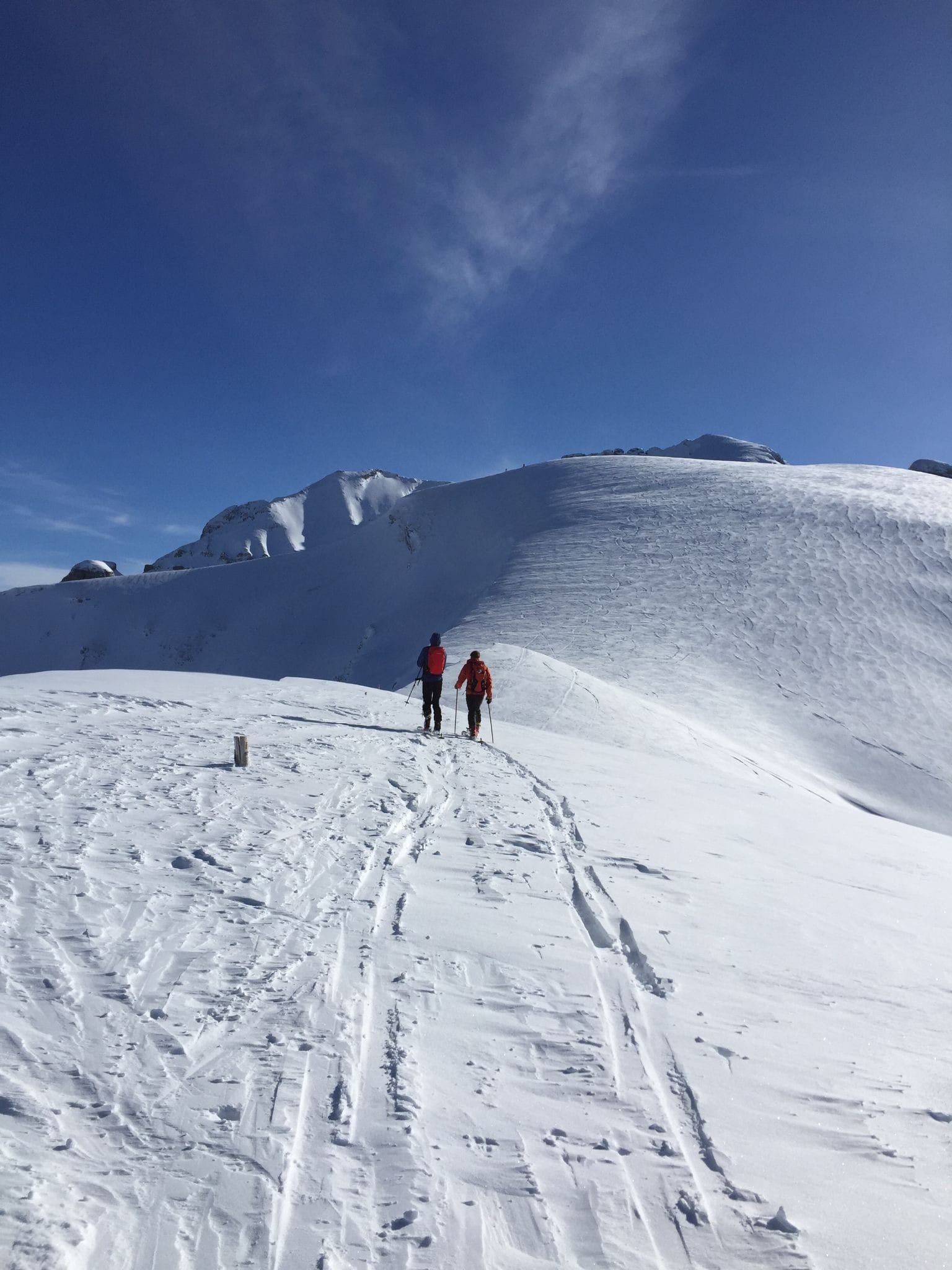
When I think about freedom, I think about mountains. I think about G, and the ways he showed me of going into them: ice axes turned from picks of survival to accessories for dancing; friends to be hugged at belay points; jokes to be shouted up right until when you start to fear for your life; a tactful, rousing silence when you have to fight for it. And I think about when he fell. Ice axes turned to wings, angels swooping down to meet him, to carry him away from his mortal body as his limbs became bloodless.
My heart sings to think of you
shrouded in gold
draped in the vulnerabilities we chose not to outgrow.
The freedom of mountains: live and let live, do all that you can to survive, to hold onto life, to get lost in the great beauty of the universe and find the limits of your pulsing, fighting body. The problem with this is that it often accompanies a retreat from society, echoing Hobbes and Locke’s assumption that society must be freedom’s antithesis. I see this in the climbing community, wherein people looking for freedom from social norms of success, freedom to be passionate about things that aren’t culturally or economically valuable, turn a blind eye to the reality that they are still embedded in that social, cultural, economic world. How can we be free in a shared world, then? How to be free amongst your neighbours, your family, the food that nourishes you and the ground that raises it, the people who wash and package it, the vehicles that transport it?
Freedom is assertion. It is recognising that there is space for you in the world, and acting within that space. As glaciers recede and sea levels rise, as freshwater becomes polluted and groundwater dries up, we find ourselves driven to effect change, to be able to live freely once again and to protect the freedom of the things we love.
Once I spoke to a friend about skiing in the woods. We celebrated together the sense of unadulterated joy and peace that this can bring about, whooshing down between tall, quiet, trees, focusing so entirely on your body and your surroundings so you can flow down the mountain without having to stop to navigate. Then, she said: “Even ski touring you leave your footprint wherever you go… Two winters ago we saw a white rabbit, and thought it was beautiful. Later I told my friend, and he said, ‘You know when you ski on their lands they get scared and run but have no food because it’s the winter, so you waste all their energy, and they can die.’ And that really affected me. With flora also – I don’t pick up flowers anymore. But it makes me happy. It’s my freedom, to not do it. I don’t feel restrained by changing my habits. It’s fun to learn how to adapt, to be helpful.”
In the peace that comes with letting strawberry juice linger on your chin
long past the time the taste is gone from your tongue —
with letting mulberries stain your fingers till
you are caught red-handed and grinning with
fingers stained and nimble, with
not a morsel of remorse.
The acts of care that we carry out towards each other and the beings on which we depend are the condition of and constraint upon our freedom. Learning the constraints gives us the chance to exercise our freedom inside the world, to find flow and sheer joy wherever we may be, to answer both to ourselves and our communities. It gives us the opportunity to come up against the places where our freedom is restricted and it shouldn’t be. It gives us the opportunity to exercise our bravery, to bring our childish and fearless curiosity with us into adulthood and spaces of communal responsibility, to get involved with each other in connected projects of liberation when we find our freedom is being inhibited by the same sources.
When I think about freedom, I think about mountains. Mountains answer to calls that surpass our human frames of reference. In them I find a reminder, over and over again, that we have choices, and more likely than not we will all make different ones. That in our differences and our obligations and our joys we can live well together. Hobbes and Locke were wrong. Freedom is not outside of morals and ethics. Freedom is personal and individual, certainly, but each individual lives in concert with hundreds of others, and the tune sounds flat if there is no harmony to pick it up. It is bound up in innumerate decisions about what a good life is and how to go about living one. Freedom is in finding spaces where we can be free together.
none of us would have lasted long in the garden of Eden.
we love too much
the pleasures of loving
the sweetness of each other’s breath and
the joys of experiencing this world.
we know that it is no crime to live messily,
to mend and break hearts as we learn to sing in harmony,
that there is nothing to forgive
if you’ve been trying to be true.
one of us is not here anymore ————
he was, is, was, is,
love and life and joy and death.
the rest of us are still here —
that is why for me he still is –
still the glue that we all were,
that we all used to piece ourselves back together,
(in the collective heartbreak of this earth),
to be never truly alone again.
Planet: Critical investigates why the world is in crisis. It is ad-free, paywall-free and 100% reader-supported. To show your support, leave a one-off tip. or become a paying supporter.


