
I'm back—with news
Order my book, watch our documentary, and upgrade your membership for new Q&A feature!

Dear community,
My maternity leave is officially over! Thank you to those who have stayed during these past four months, and especially to the paying members who continued to support myself and new family in that time.
Before we dive into this week's newsletter, I have some big announcements.
My book is officially here!
"Breathtakingly original, brilliantly argued"
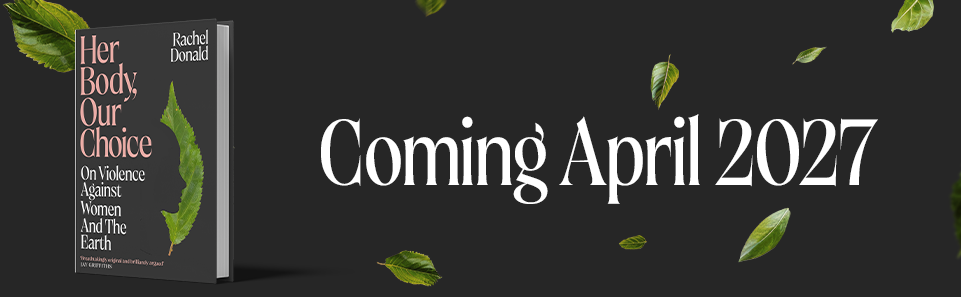
HER BODY, OUR CHOICE: On Violence Against Women And The Earth
Her Body, Our Choice is now available for pre-order! Here's the publisher's announcement:
In HER BODY, OUR CHOICE, Rachel Donald explores the powerful connections between violence against women and the destruction of our planet, challenging us to rethink the systems of power, entitlement and exploitation that shape our world.
Urgent, fearless and deeply moving, HER BODY, OUR CHOICE is a book that challenges how we see the world and inspires us to imagine how we might change it.
"Her Body, Our Choice is breathtakingly original, and brilliantly argued. I know no book that offers such a necessary and unique analysis of this perilous present." – Jay Griffiths, author of How Animals Heal Us
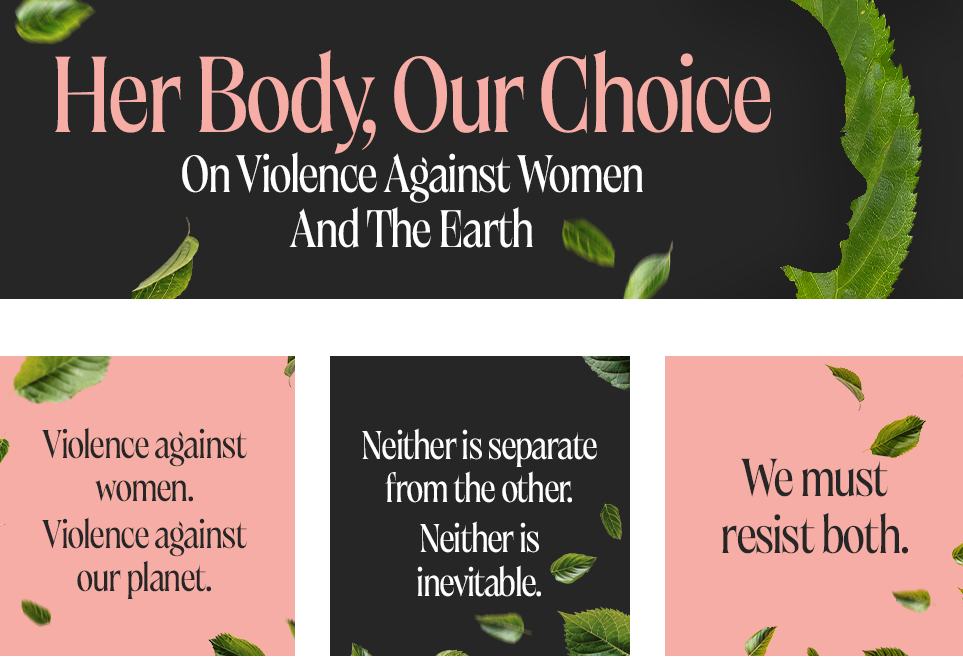
Pre-ordering* is so, so important for this book's visibility. If a few thousand of you pre-order then it publishes straight onto the UK's bestseller list next year. That gives it more public traction, and I want this book to go as far as possible out of the climate/collapse niche. This is a book for everyone, for it interrogates violence at the most intimate level, and provides an overarching analysis of exactly why the world is in crisis—and what we can do about it.
So please pre-order today to help me get this book out into the world. Everyone who pre-orders a copy will recieve a complimentary paid subscription for one year! Just email me a screenshot of your receipt for the book at info@planetcritical.com and I'll add you to the paid list.
For those of you who already have a paid subscription, your questions will be given top priority in that month's Q&A (more info below).
*Currently, the book is available for pre-order in the UK. It will soon be available in other territories around the world, and I'll keep you abreast of when those titles, and other language versions, become available.
Watch Resisting Goliath now!
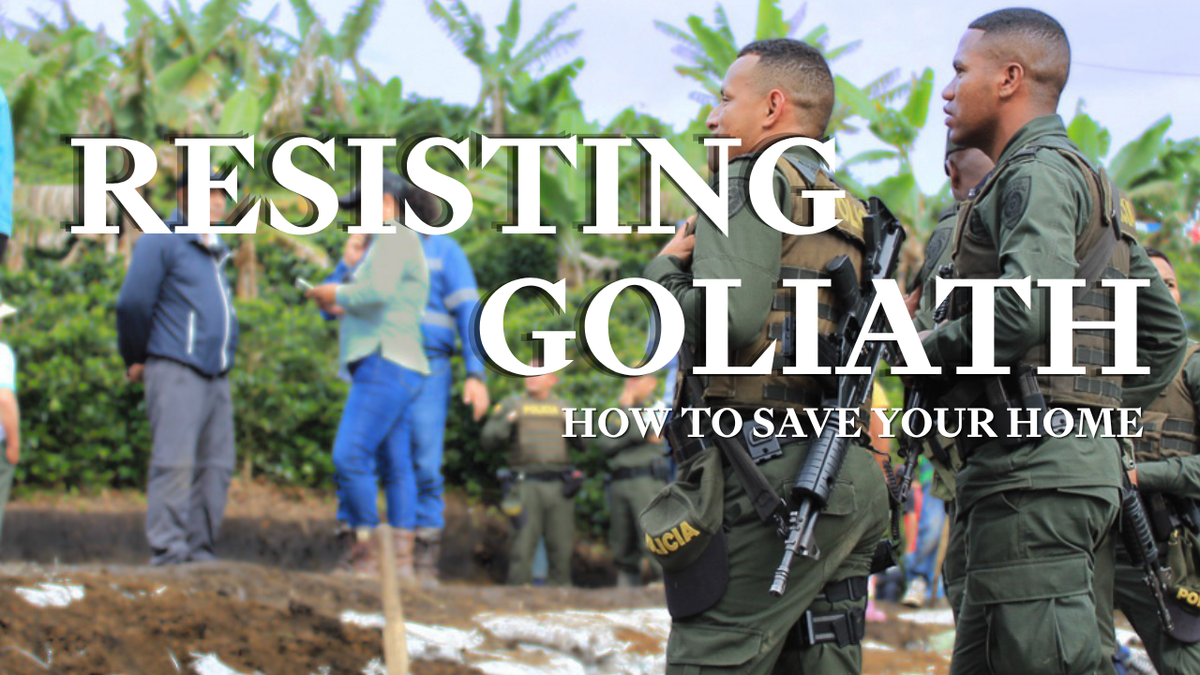
Our next big piece of news: You can now watch our first feature-length documentary, Resisting Goliath: How to Save Your Home. It is also available to watch on WaterBear.
In rural Colombia, a tiny community are defending their home from one of the biggest mining companies in the world. For twenty years, they blocked roads, petitioned governments and marched against the company's ploys, spurred on by the devastation exacted on neighbouring towns in the pursuit of gold. But their traditional activism couldn't keep Goliath at bay forever. To win, and protect the mountain they call home, they needed to create a radically different future. Told across two neighbouring towns in different stages of takeover, Resisting Goliath is a roadmap for citizens everywhere to defend their home from the threats of extractivism.
 Rachel Donald
New Monthly Q&A!
This brings me on to the final piece of news: I'm going to follow in the footsteps of the brilliant Sarah Kendzior and start a monthly Q&A for paying subscribers. Like Sarah's model, only paying subscribers will be able to submit a question, but the answers will be public for everyone to read.
This is the first time in almost six years there will be a difference in the free and paid tiers on Planet: Critical, but it feels important to offer something to those of you who support the ethos of this work because you believe in it, not because of paywalls. Any other suggestions please let me know in the comments below!
With that out of the way, I'm blessed to report that motherhood, so far, has been nothing but a gift, and our daughter is a happy, bouncing, sleeping (!) wonder who came into the world with her eyes wide and searching.
After birthing her, it took about two weeks to find the edges of myself, and to feel that my body was at all distinct with every other body in the world—especially hers. But once I did, I began to read, ink on paper: novels, memoirs, polemics, my printed companions. Some of the fiction was utter garbage, some of the nonfiction has taken up residence inside me. It was Ruby Russel who first wrote in Doing It All (UK/USA) that birthing a child blurs the edges of oneself, a profundity I return to every day. As I read, I cast my mind often to this place, Planet: Critical, and what I would or would not choose to write about on any given day. I will be honest with you all: for months, the world turned, but I could think only of my daughter. In fact, as this date approached—and I am writing just as the clock turns midnight for while she is a brilliant sleeper, I am not—I worried I would have nothing more to say in the vein of Planet: Critical ever again.
Then, just two nights ago, Robert and I, in a small village on the Greek coast, found ourselves sitting in a restaurant near two tables of Israelis. Earlier that same day, we had discussed how disappointing it was that Netanyahu's government is supported by enough Israelis to still win a significant number of seats in parliament. We discussed the chilling sensation we'd had reading about the election results, as the last vestiges of illusion were stripped away that maybe, just maybe, Israel's genocidal campaign against the Palestinians was the dictates of just a few mad men. Of course, neither of us ever believed that. But there was something comforting in the idea of that being a possibility. The election results shattered that possibility: there are Zionists who live in the state of Israel, Zionists who apparently believe that blowing up children and hospitals and journalists and aid workers is the work of true leaders.
In the restaurant, Robert asks me: "Would we sit in a restaurant with Nazis?"
"Of course not."
"Of course not."
"We don't know if they support their government."
"Should we ask?"
"Maybe?"
And so we began to probe: morality, social norms, Judaism, propaganda, the history of anti-semitism, the holocaust, Sudan, West Papua, the colonisation of the USA. Urgently, and with not an insignificant amount of agitation, we tried to establish what it was we should do: the right thing, the just thing, the thing that spoke to the reality of living in a world where perhaps its most powerful country per capita celebrates blowing its most vulnerable people to pieces.
The Greek government opened its arms to Israeli tourism this summer, but Greeks are not happy about it. The entire country, it seems, has been targeted by graffiti campaigns: Zionists Out, Fuck Off Zionists, Zionists Not Welcome, Free Palestine. But Israeli tourists have launched an incredulous counter-campaign, covering up the graffiti, crossing bits out, adding to it, or challenging it. The first time I stumbled across this public war of words was in a tiny village on Crete. There, on the walls of the local pharmacy, someone had put an X through the Not. Under it, Palestine had been scribbled out and someone had written instead: Free the world!
Public perception is critical. Every external pressure must be applied; only Israelis can end this reign of terror, on the streets and at the ballot box. In the restaurant, we agree that those who support their government's genocidal campaign should not be allowed to move through the world with comfort. This is a bare minimum.
"I know exactly what I would do to someone who supported the extermination of the Jews."
My mother and her friends once found themselves in a room with Nazis, in a small restaurant on a Spanish hillside. It was the eighties. The group of Germans, rowdy with booze, started singing. The German speaker at the table paled: they were singing songs from the Third Reich. A shouting match began, escalating until the elderly couple who ran the restaurant shut the whole place down and hurried everyone out the door. Insults were fired back and forth. Then the Germans—literal Nazis—tried to run them off the road.
"Is it incumbent on every Israeli who's against the war to identify themselves as such in public?" I ask, looking over, searching for a sign.
"Americans do it all the time: 'I didn't vote for him.' 'I'm sorry, I'm not one of them.' 'I hate him too.' Etc etc."
Our daughter plays with her own fingers, oblivious that there is a world beyond her senses. I think of our responsibility towards her and it feels two-pronged. Our responsibility towards her is a responsibility towards all children.
"So do we ask?"
"And then what?"
And then the world came hurtling in.
In the end, we asked the restaurant owner. He told us he thought they were "good guys", Israelis escaping the war by buying property in the village. This didn't assuage us entirely, but enough to withdraw into ourselves somewhat and watch baby girl. Phil Collins came over the speakers. Her father sang to her, and for the first time in her life, she giggled. In that moment, we forgot again. But not for long.
The world is teetering on the edge of something, an edge I think we are all fearful of rushing past, even despite the atrocities of this age. Something is coming: crisis, collapse, history itself. We are on the edge of it, together. Planet: Critical is where we can convene to feel that edge, to taste it, to fear it, to resist it.
Welcome back.
Planet: Critical investigates why the world is in crisis. It is ad-free, paywall-free and 100% reader-supported. To show your support, leave a one-off tip. or become a paying supporter.


